
Is a Corroded Boiler Case ‘At Risk’ or ‘Immediately Dangerous’?
As heating engineers, we see a lot of things when we open up a boiler, but some faults serve as a stark reminder of why regular maintenance is so critical.
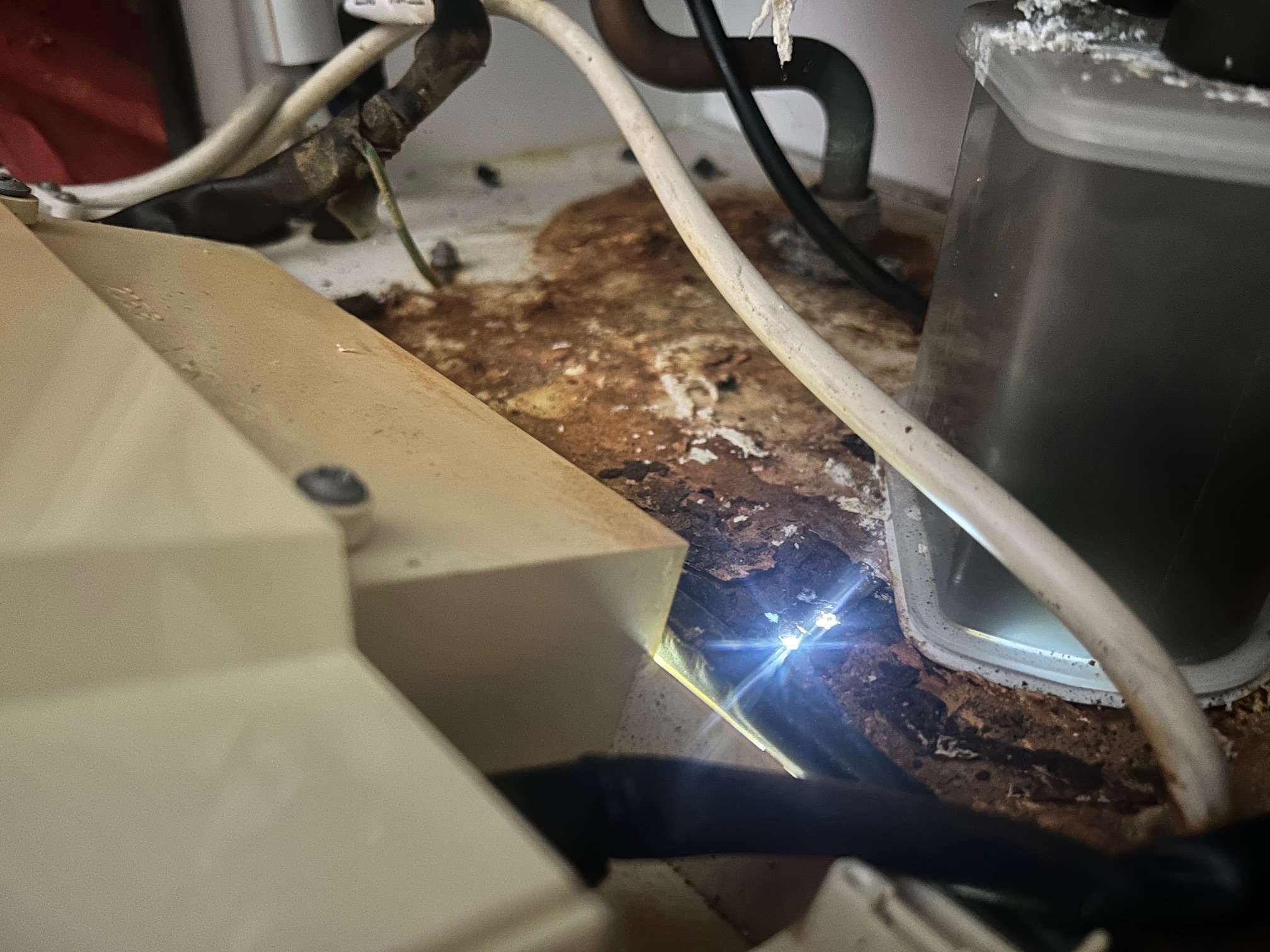
Earlier this week we were called out to a Ideal Logic repair, it was obvious the boiler that hadn’t been serviced in a long time. Upon inspection, we found that the condensate trap had completely backed up. Because condensate water is slightly acidic, the backed-up water had leaked out and pooled onto the steel boiler case.
Over time, that acidic water silently ate away at the metal, causing it to corrode so badly that the case actually had holes right through it.
This leads to a very important, and often misunderstood, question in gas safety: Is a corroded boiler case ‘at risk’ or ‘immediately dangerous’? The answer? It depends entirely on the design of the boiler.
The Culprit: Acidic Condensate
Modern condensing boilers are incredibly efficient because they extract lost heat from the flue gases. A byproduct of this process is condensation. This liquid is mildly acidic (similar to tomato juice) and is safely drained away via a condensate pipe and trap.
However, when a boiler isn’t serviced regularly, debris can build up and block that trap. The acidic water has nowhere to go but backward, where it can wreak havoc on internal components and the steel casing.
Why Pressure Matters: Negative vs. Positive Cases
When a boiler case has a hole in it, the seal is broken. The safety classification comes down to whether the boiler operates with a negative pressure case or a positive pressure case.
Here is how the rules apply:
- Negative Case Pressure = ‘At Risk’ (AR) The boiler we worked on yesterday was an Ideal Logic Heat only boiler. These are designed with a negative pressure case. This means that the fan pulls air into the boiler. If there is a hole in the case, the boiler will draw air in from the room rather than pushing harmful gases out. Because it affects the air/gas mixture and compromises the room seal, it is classified as At Risk (AR). The boiler is safely turned off with the customer’s permission until repaired or replaced.
- Positive Case Pressure = ‘Immediately Dangerous’ (ID) If the exact same corrosion had happened on a boiler with a positive pressure case, the situation would be much worse. In these boilers, the fan pushes air and combustion gases through the system, creating positive pressure inside the casing. A hole in the case means deadly carbon monoxide and combustion gases would be actively blown out into the room. This makes it Immediately Dangerous (ID), requiring the boiler to be disconnected from the gas supply straight away.
The Real Lesson: Don’t Skip Your Service
Whether a fault leaves your boiler ‘At Risk’ or ‘Immediately Dangerous’, the end result is a broken boiler, a cold house, and a potentially expensive boiler repair or replacement bill.
This entire situation could have been completely avoided if the condensate trap had been cleaned out during a routine annual boiler service. A quick, simple clean would have saved the steel casing from turning into Swiss cheese.
Has it been a while since your boiler was looked at? Don’t wait for acidic water to eat through your boiler case. Ensure your home is safe and your boiler is running efficiently.
Book your annual boiler service with iWarm.co.uk today


