
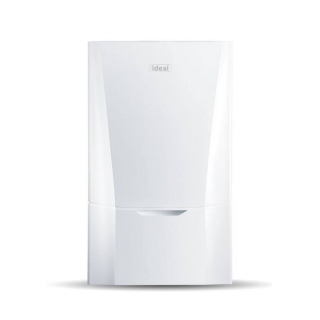
Why Your “A-Rated” Condensing Boiler Is Wasting Gas
The Delta-T Efficiency Secret
Every week across North East Lincolnshire, homeowners spend thousands of pounds upgrading to brand new, A-rated condensing boiler, expecting their gas bills to plummet. But when the winter rolls in, those massive promised savings rarely materialise.
The harsh reality is that a modern boiler is only A-rated in the laboratory. Once it is hung on your wall, its actual efficiency depends entirely on how it is set up. If your boiler is running the same way your old one did twenty years ago, it is secretly wasting gas and blowing your money straight out of the flue.
Here is the technical secret to unlocking true boiler efficiency: flow temperatures and Delta-T.
The “Condensing” Illusion
To understand why your boiler might be wasting fuel, you have to understand what makes it a “condensing” boiler in the first place.
When gas burns, it produces water vapour. In older, standard-efficiency boilers, that intensely hot vapour was simply vented outside. A condensing boiler is designed to capture that escaping vapour, cool it down until it turns back into a liquid (condenses), and extract the hidden “latent heat.” Reusing that waste heat is exactly what pushes a boiler from 75% efficiency up to 92%+ efficiency.
But there is a catch. The boiler will only condense if the water returning from your radiators is cool enough.
The 80°C Problem
For decades, the standard practice was to crank the boiler’s flow temperature (the water leaving the boiler) up to 80°C. By the time that water travelled around the radiators and returned to the boiler, it was usually around 60°C.
Here is the problem: the physical “dew point” of natural gas is roughly 54°C.
If the water returning to your boiler is 60°C, the boiler is physically too hot to condense the flue gases. It completely bypasses its most efficient feature and acts exactly like an old, inefficient, D-rated boiler. You are paying for A-rated technology but getting C-rated performance.
Delta-T and System Balancing
This is where Delta-T ($\Delta$T) comes in. Delta-T simply means the difference in temperature between the hot water leaving the boiler and the cooler water returning to it.
To force your boiler to condense, you need the radiators to extract enough heat from the water so that it returns to the boiler at 54°C or lower. If a system isn’t balanced properly, meaning the water rushes through the radiators too quickly without giving off its heat, the return temperature stays too high.
How to Fix Your Condensing Boiler
Getting your system to condense consistently isn’t about buying expensive new gadgets; it is about proper system commissioning.
- Lowering the Flow Temperature: Most homes do not need 80°C water to get warm, especially in the milder autumn and spring months. Dialling down your boiler’s flow temperature on the front panel to 60°C or 65°C practically guarantees the return water will be cool enough to trigger condensing mode.
- Radiator Balancing: A competent engineer will restrict the flow of water on the “lockshield” valves of your radiators. This slows the water down just enough to let the heat transfer into your rooms, ensuring a cool return temperature.
- Weather Compensation: This is a small outdoor sensor that communicates with your boiler, automatically turning the flow temperature down on mild days and only cranking it up when there is a freezing frost.
If your radiators are constantly boiling hot to the touch, your boiler probably isn’t condensing. iWarm are highly qualified heating engineers operating across Grimsby, Cleethorpes, and surrounding areas. Book a comprehensive Boiler Service to have your system professionally balanced, or contact us regarding Boiler Repairs if your system is struggling to heat your home evenly.


[…] Why Your “A-Rated” Condensing Boiler Is Wasting Gas […]