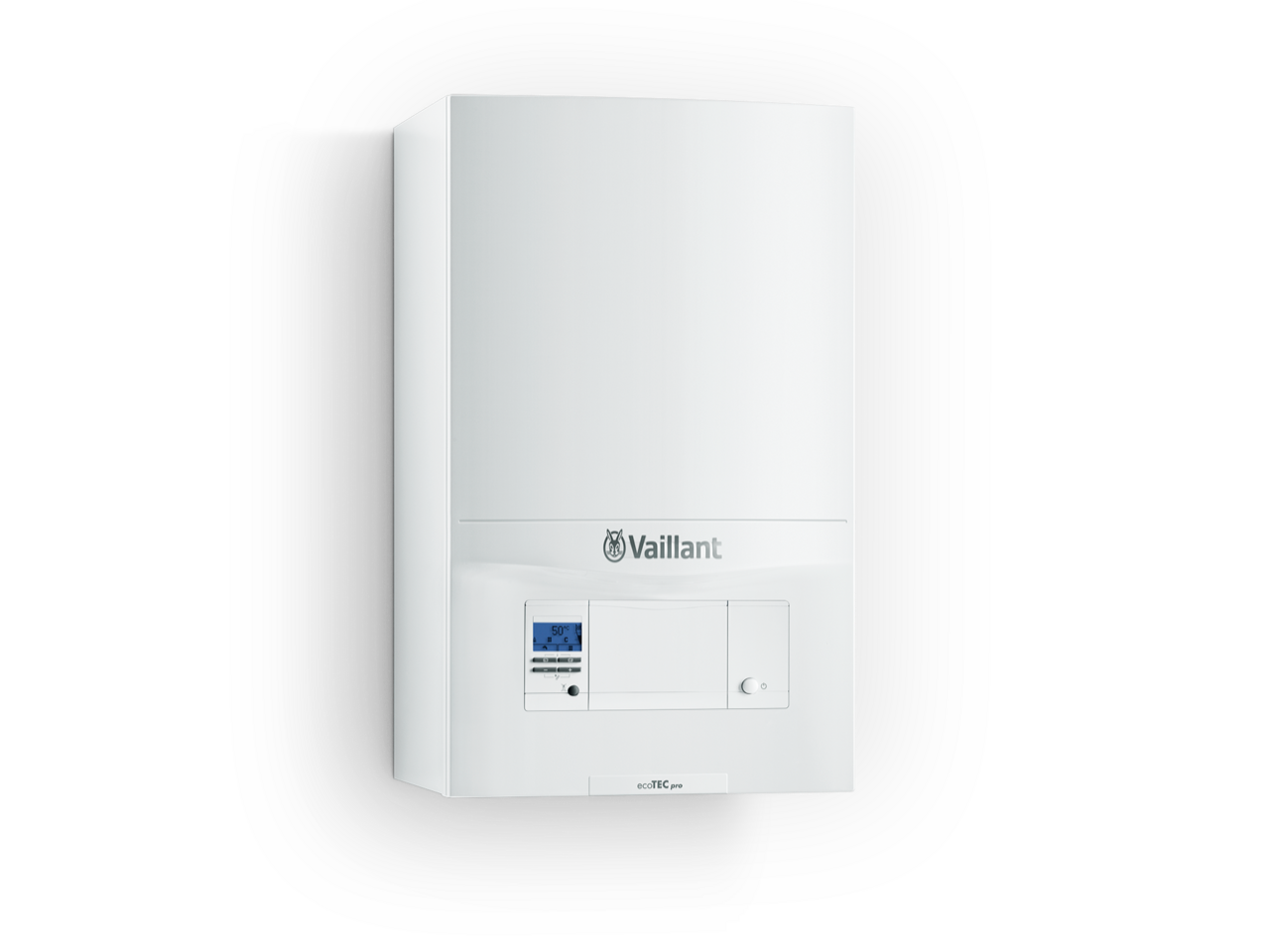
Vaillant Ecotec Pro Fault Codes & Diagnostics
This article is dedicated to looking at the range of Vaillant Ecotec Pro fault codes and the possible diagnostic causes. This article is for informational purposes only and any repairs performed on a Vaillant Ecotec Pro must be carried out by a Gas Safe registered engineer.
You must be qualified and have the correct tools / equipment (e.g. flue gas analyser) to work with this room sealed appliance. You must not attempt any repairs yourself.
F.00 or F00 – Flow temperature sensor interruption.
Possible Causes:
- NTC plug not plugged in or has come loose.
- Multiple plug on the PCB not plugged in correctly.
- Interruption in cable harness.
- NTC defective.
F.01 or F01 – Return temperature sensor interruption.
Possible Causes:
- NTC plug not plugged in or has come loose.
- Multiple plug on the PCB.
- Not plugged in correctly.
- Interruption in cable harness.
- NTC defective.
F.02 or F02 – Interruption cylinder charging sensor actoSTOR (NTC) only in combination with F.91.
Possible Causes:
- NTC defective.
- NTC cable defective.
- Defective plug connection on NTC.
- Defective plug connection on actoSTOR electronics.
F.03 or F03 – Interruption cylinder sensor actoSTOR (NTC) only in combination with F.91.
Possible Causes:
- NTC defective.
- NTC cable defective.
- Defective plug connection on NTC defective plug connection on actoSTOR electronics.
F.10 or F10 – Flow NTC short circuit.
Possible Causes:
- NTC defective.
- Short circuit in cable harness, cable/casing.
F.11 or F11 – Return NTC short circuit.
Possible Causes:
- NTC defective.
- Short circuit in cable harness, cable/casing.
F.12 or F12 – Short circuit at cylinder charging sensor (NTC) only in combination with F.91.
Possible Causes:
- NTC defective.
- Short circuit in cable harness, cable/casing.
F.13 or F13
- Fault code F.13 meaning (for VU-/VUW boiler) : Short circuit warm start sensor/ cylinder sensor.
- Fault code F.13 meaning (for VUW boiler with actoSTOR) : Short circuit cylinder sensor (NTC) only in combination with F.91.
Possible Causes: - NTC defective.
- Short circuit in cable harness.
- Cable/casing.
F.20 or F20 – Safety switch-off > temperature limiter.
Possible Causes:
- Incorrect earth connection between cable harness and boiler.
- Flow or return NTC defective (loose connection) black discharge via ignition cable, ignition plug or ignition electrode.
F.22 or F22 – Safety switch-off: low water pressure.
Possible Causes:
- No or to low water pressure in the boiler.
- Water pressure sensor defective.
- Cable to pump or water pressure sensor loose/not connected/defective.
F.23 or F23 – Safety switch-off. Temperature difference too great.
Possible Causes:
- Pump blocked.
- Insufficient pump output.
- Air in boiler flow and return NTC interchanged.
F.24 or F24 – Safety switch-off: Temperature rise too fast.
Possible Causes:
- Pump blocked.
- Poor pump performance.
- Air in boiler.
- System pressure too low.
- Non-return valve blocks / incorrectly installed.
F.25 or F25 – Safety switch-off: Flue gas temperature too high.
Possible Causes:
- Break in plug connection for optional flue gas safety thermostat (STB).
- Break in cable harness.
F.26 or F26 – Gas valve without function.
Possible Causes:
- Gas valve stepper motor not connected.
- Multiple plug on the PCB not plugged in correctly.
- Interruption in cable harness.
- Gas valve stepper motor defective.
- Electronics defective.
F.27 or F27 – Safety switch-off: Flame simulation.
Possible Causes:
- Moisture on the electronics.
- Electronics (flame monitor) defective.
- Gas solenoid valve leaking.
F.28 or F28 – Failure during start-up. Ignition unsuccessful.
Possible Causes:
- Gas meter defective or gas pressure regulator has triggered.
- air in gas.
- gas flow pressure too low.
- thermal isolator device (TAE) has triggered.
- condensate duct blocked.
- incorrect gas restrictor.
- incorrect ET gas valve.
- fault on the gas valve.
- multiple plug on PCB incorrectly plugged in.
- break in cable harness.
- : ignition system (ignition transformer, ignition cable, ignition plug, ignition electrode) defective.
- : ionisation current interrupted (cable, electrode).
- : incorrect earthing of boiler.
- : electronics defective.
F.29 or F29 – Failure during operation. Re-ignition unsuccessful.
Possible Causes:
- Gas supply temporarily stopped.
- flue gas recirculation.
- condensate duct blocked.
- faulty earthing of boiler.
- ignition transformer has spark failure.
F.32 or F32 – Fan fault.
Possible Causes:
- Plug at fan not correctly plugged in.
- multiple plug on PCB not correctly plugged in.
- break in cable harness.
- fan blocked.
- Hall sensor defective.
- electronics defective.
F.35 or F35 – Air/flue gas duct fault.
Possible Causes:
- Air/flue gas duct blocked.
F.42 or F42 – Coding resistor fault (possible in combination with F.70).
Possible Causes:
- Short circuit/interruption in coding resistor output range (in cable harness at heat exchanger) or gas group resistor (on PCB).
F.49 – eBUS fault.
Possible Causes:
- Short circuit on eBUS.
- eBUS overload or two power supplies with different polarities on the eBUS.
F.52 or F52 – Mass flow sensor connection fault.
Possible Causes:
- Mass flow sensor not connected/disconnected, plug not connected or incorrectly connected.
F.53 or F53 – Mass flow sensor fault.
Possible Causes:
- Mass flow sensor faulty.
- Filter below venturi filter cap wet or blocked.
- Gas flow pressure too low.
F.54 or F54 – Gas pressure fault (in combination with F.28/F.29).
Possible Causes:
- No or too little gas supply pressure.
- Gas valve closed.
F.56 pr F56 – Mass flow sensor regulation.
Possible Causes:
- Gas valve defective.
- Cable harness to gas valve defective.
F.57 or F57 – Fault during comfort safety mode.
Possible Causes:
- Ignition electrode highly corroded.
F.61 or F61 – Gas valve regulation – Short circuit/short to earth in cable harness for the gas valve.
Possible Causes:
- Gas valve defective (coils shorted to earth).
- Electronics defective.
F.62 or F62 – Gas valve switch-off delay – Delayed shutdown of gas valve.
Possible Causes:
- Delayed extinguishing of flame signal.
- Gas valve leaking.
- Electronics defective.
F.63 or F63 – EEPROM error.
Possible Causes:
- Electronics defective.
F.64 or F64 – Electronics/NTC fault.
Possible Causes:
- Supply or return NTC short circuited.
- Electronics defective.
F.65 or F65 – Electronic temperature fault.
Possible Causes:
- Electronics overheating due to external influences.
- Electronics defective.
F.67 or F67 – Electronics/flame fault.
Possible Causes:
- Implausible flame signal, electronics defective.
F.68 or F68 – Unstable flame signal.
Possible Causes:
- fault Air in gas.
- gas flow pressure too low.
- wrong air ratio.
- condensate route blocked.
- wrong gas restrictor.
- ionisation flow interruption (cables, electrodes).
- flue gas recirculation.
- condensate route.
F.70 or F70 – Invalid device specific number (DSN).
Possible Causes:
- Spare part case: Display and PCB replaced at same time and DSN not set.
- Wrong or missing output range coding resistor.
F.75 or F75 – No pressure change detection when starting pump.
Possible Causes:
- Water pressure sensor and / or pump defective.
- Air in heating installation.
- Too low water pressure in boiler. Check adjustable bypass.
- Connect external expansion vessel to return.
F.76 or F76 – Overheating protection on primary heat exchanger has responded.
Possible Causes:
1 : Cable or cable connections for safety fuse in primary heat exchanger or primary heat exchanger defective.
F.77 or F77 – Flue non-return flap/condensate pump fault.
Possible Causes:
1 : No response from flue non-return flap or condensate pump defective.
F.78 or F78 – Interruption to DHW outlet sensor at external controller.
Possible Causes:
1 : UK link box is connected, but hot water NTC not bridged.
F.83 or F83 – Flow and/or return temperature sensor temperature change fault. When the burner starts, the temperature change registered at flow and/or return temperature sensor is non-existent or too small.
Possible Causes:
- Not enough water in the boiler
- Flow and/return temperature sensor not in correct position at pipe.
F.84 or F84 – Flow/return temperature sensor temperature difference implausible. Flow and return temperature sensors returning implausible values.
Possible Causes:
- Flow and return temperature sensors have been inverted.
- Flow and return temperature sensors have not been correctly fitted.
F.85 or F85 – Flow and return temperature sensors incorrectly fitted
Possible Causes:
- Flow and/or return temperature sensors have been fitted to the same pipe/wrong pipe.
F.92 or F92 – Coding resistor fault
Possible Causes:
- The coding resistor on the PCB does not match the entered gas family. Check the resistor, repeat the gas family check and enter the correct gas family.
How to Avoid Vaillant Ecotec Fault Codes
Prevention Is Easier Than The Cure
If your boiler has already broken down and you’re looking to book a Vaillant boiler repair, then it’s already too late. But the easiest way of keeping your boiler running efficiently and problem free is through regular maintenance. All boiler manufacturers specify their boilers should undergo an annual boiler service and inspection.
Replacement boiler parts and the associated gas engineer labour costs are expensive. We appreciate society is going through a “cost of living crisis” and finances are tight, but it’s for that reason why you should invest a small financial outlay on maintaining your hot water and heating system.
Even if your boiler hasn’t been serviced in several years, having a qualified gas engineer clean and service the appliance can help reduce the likelihood of a terminal outcome should anything go wrong.
Use our online booking form, or click below to speak to us about booking your boiler service today.